Assessing the alignment of the biology unified examination with the secondary school curriculum
Article Sidebar
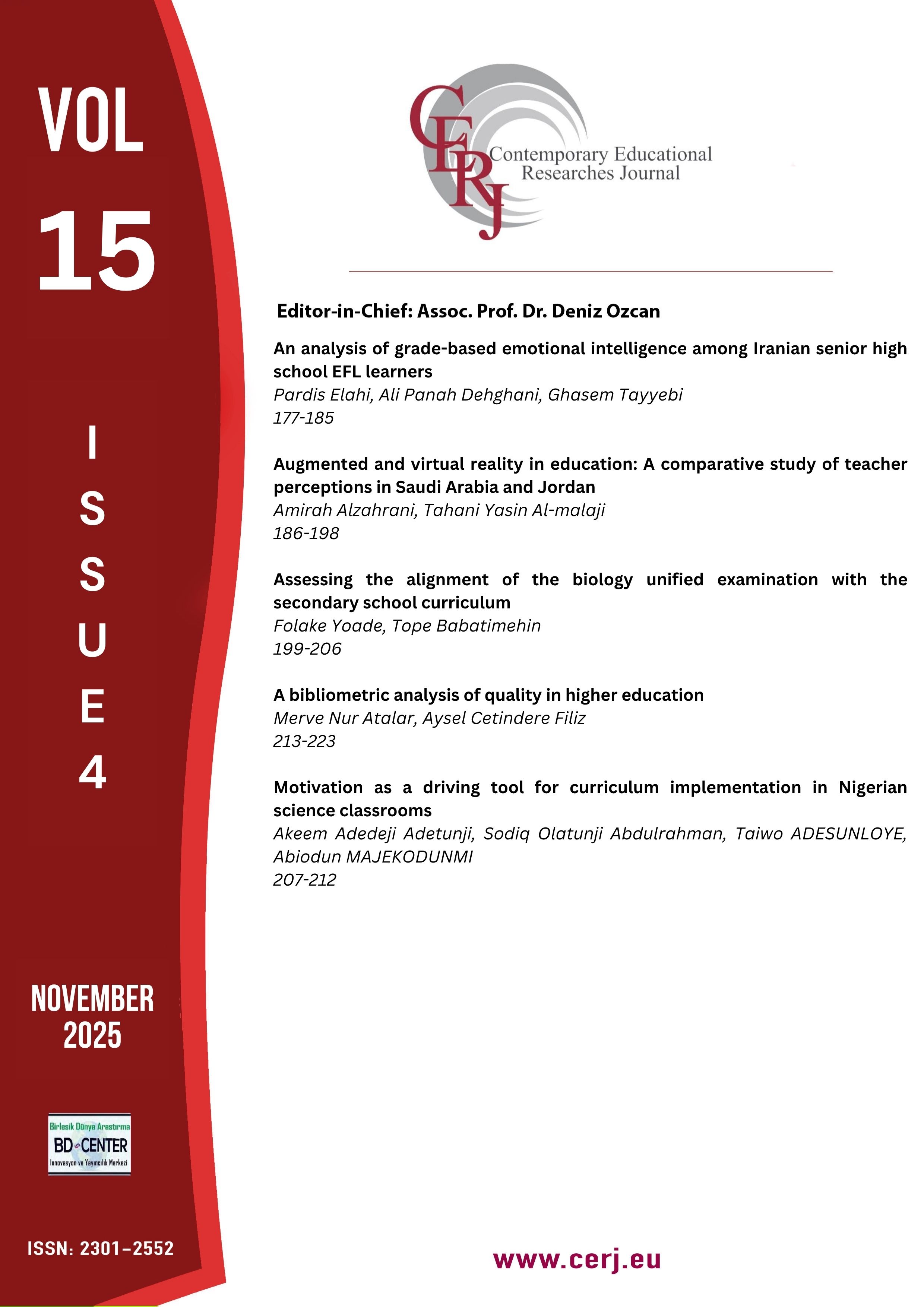
Main Article Content
Abstract
This study investigated the extent to which the Unified Examination aligns with the senior secondary school Biology curriculum and evaluated its effectiveness in assessing both theoretical knowledge and practical skills. The research was motivated by growing concerns about the validity of standardized assessments in reflecting curricular goals and students’ scientific competencies. A descriptive survey research design was adopted, involving 50 Biology teachers and 250 students selected through simple random sampling. Data was collected using a validated questionnaire titled the Evaluation of Biology Unified Examination Questionnaire. Descriptive analyses were conducted to determine the degree of alignment and adequacy of assessment practices. The findings revealed that the Unified Examination moderately reflects the content of the Biology curriculum but insufficiently captures practical skill development. The study concludes that while the Unified Examination serves as a useful tool for evaluating theoretical understanding, it requires improvement to adequately assess experimental and process skills. These insights are valuable for curriculum planners and examination bodies seeking to enhance assessment quality in science education.
Keywords: Assessment; Biology curriculum; practical skills; secondary education; unified examination.
Downloads
Article Details

This work is licensed under a Creative Commons Attribution-NonCommercial-NoDerivatives 4.0 International License.
Authors who publish with this journal agree to the following terms:
- Authors retain copyright and grant the journal right of first publication with the work simultaneously licensed under a Creative Commons Attribution License that allows others to share the work with an acknowledgement of the work's authorship and initial publication in this journal.
- Authors are able to enter into separate, additional contractual arrangements for the non-exclusive distribution of the journal's published version of the work (e.g., post it to an institutional repository or publish it in a book), with an acknowledgement of its initial publication in this journal.
- Authors are permitted and encouraged to post their work online (e.g., in institutional repositories or on their website) prior to and during the submission process, as it can lead to productive exchanges, as well as earlier and greater citation of published work (See The Effect of Open Access).