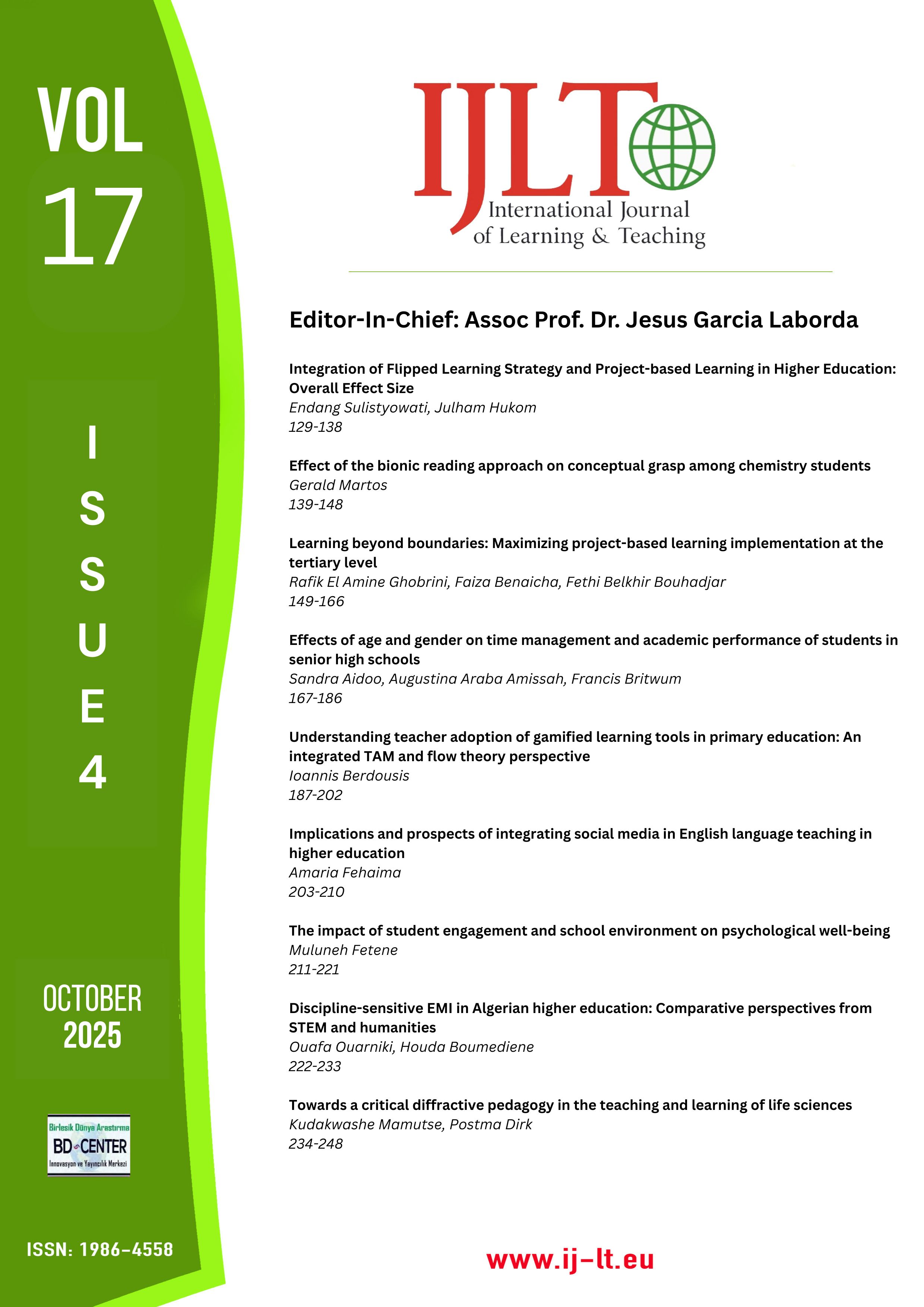
Effects of age and gender on time management and academic performance of students in senior high schools
Article Sidebar
Main Article Content
Abstract
Timely completion of academic programs is considered essential for students’ educational success, yet limited studies have explored how demographic factors influence the connection between time management and academic performance. This study examined the moderating effects of age and gender on the relationship between time management and academic performance among Senior High School students. A total of 292 participants were selected through proportionate and random sampling techniques and completed standardized instruments measuring time management, while academic performance was assessed using test results. The analysis revealed that age and gender did not significantly influence or moderate the relationship between time management and academic performance. These findings suggest that the link between managing time effectively and achieving strong academic outcomes remains consistent across demographic groups. The study highlights the importance of integrating structured time management programs into educational curricula to enhance students’ organizational, prioritization, and scheduling skills, ultimately promoting academic success and self-regulated learning.
Keywords: Academic performance; age differences; gender differences; secondary education; time management
Downloads
Article Details

This work is licensed under a Creative Commons Attribution-NonCommercial-NoDerivatives 4.0 International License.
Authors who publish with this journal agree to the following terms:
- Authors retain copyright and grant the journal right of first publication with the work simultaneously licensed under a Creative Commons Attribution License that allows others to share the work with an acknowledgement of the work's authorship and initial publication in this journal.
- Authors are able to enter into separate, additional contractual arrangements for the non-exclusive distribution of the journal's published version of the work (e.g., post it to an institutional repository or publish it in a book), with an acknowledgement of its initial publication in this journal.
- Authors are permitted and encouraged to post their work online (e.g., in institutional repositories or on their website) prior to and during the submission process, as it can lead to productive exchanges, as well as earlier and greater citation of published work (SeeThe Effect of Open Access).